Interactive installation
Fragments of the Cloud
2026
Interactive installation
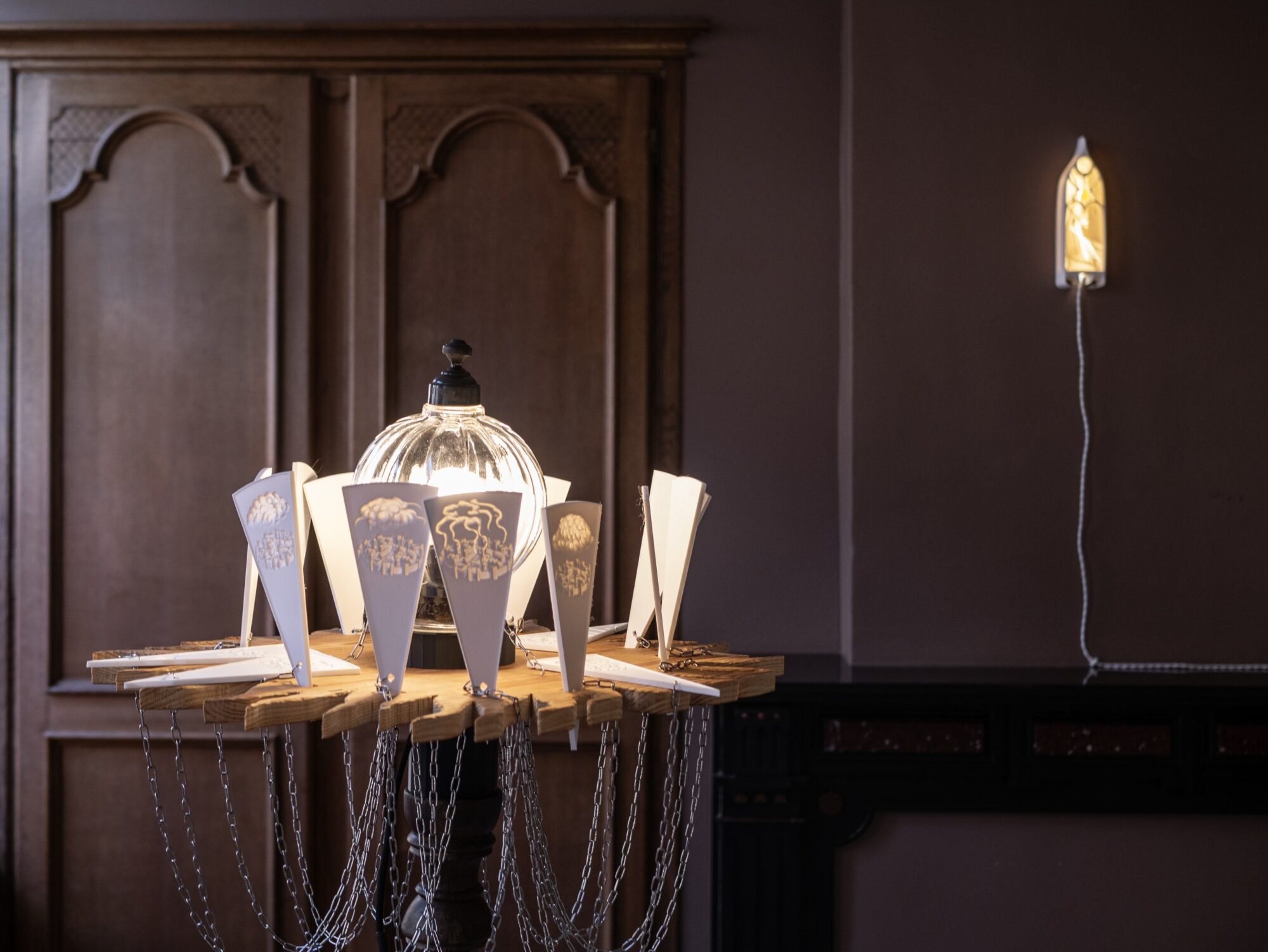
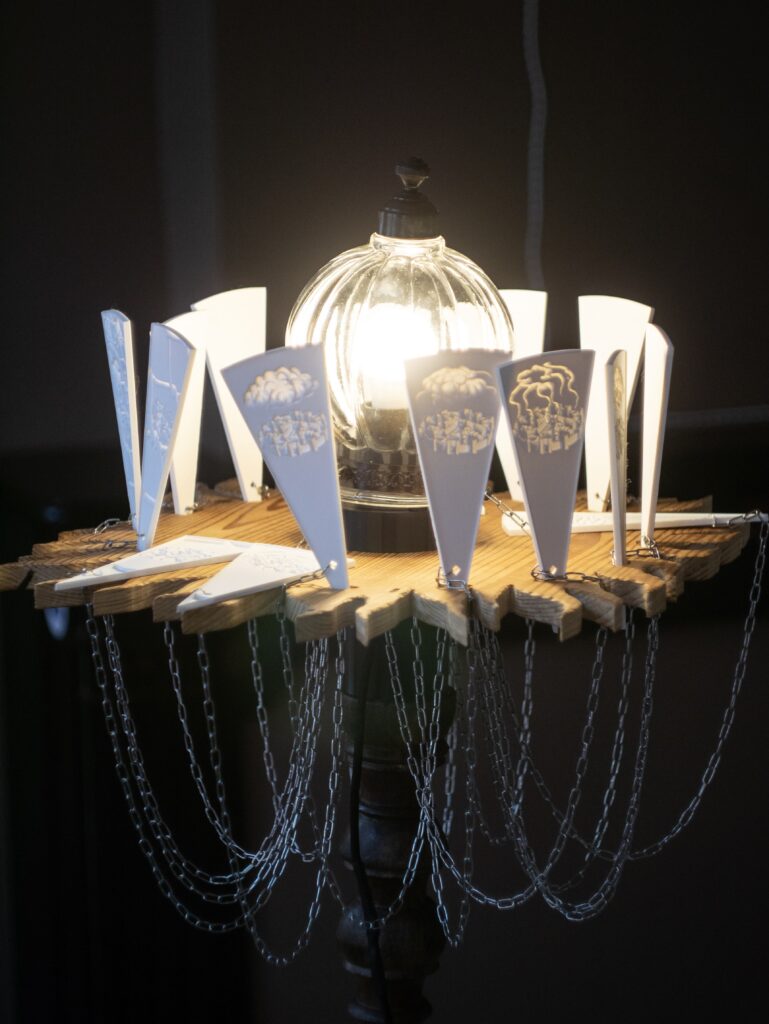
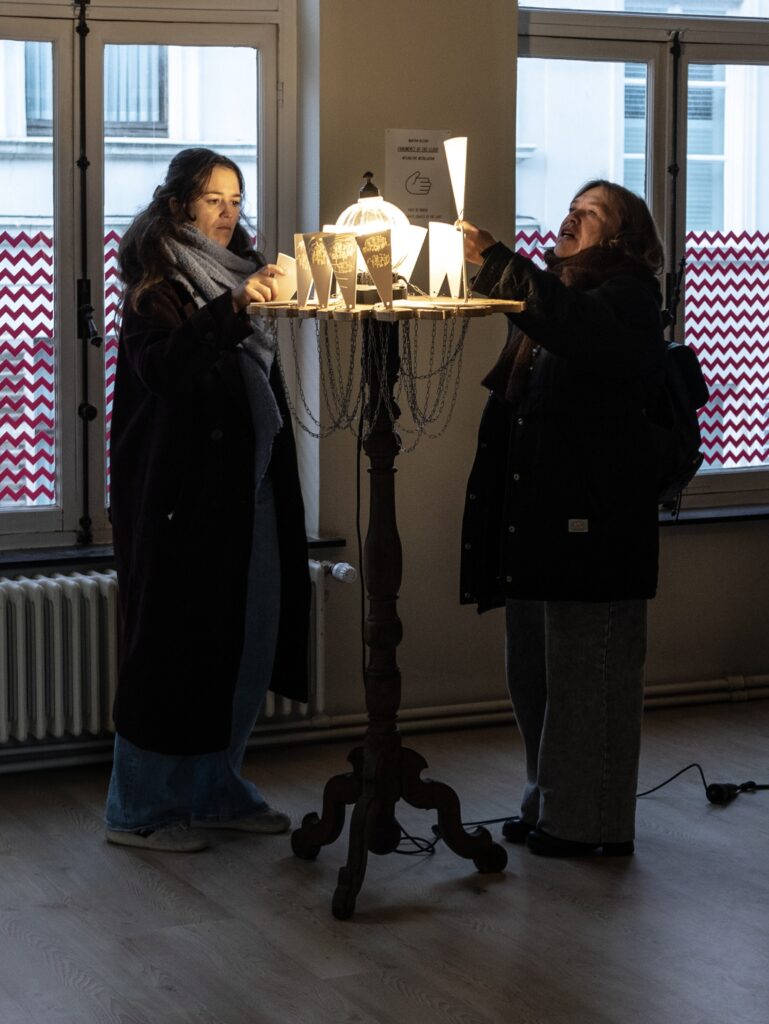
3D-printed lithophanes, PLA filament, reclaimed wood, reclaimed glass, chains, handmade antique glass lampshade
approx. 50 x 50 x 130 cm
An Invitation to Touch
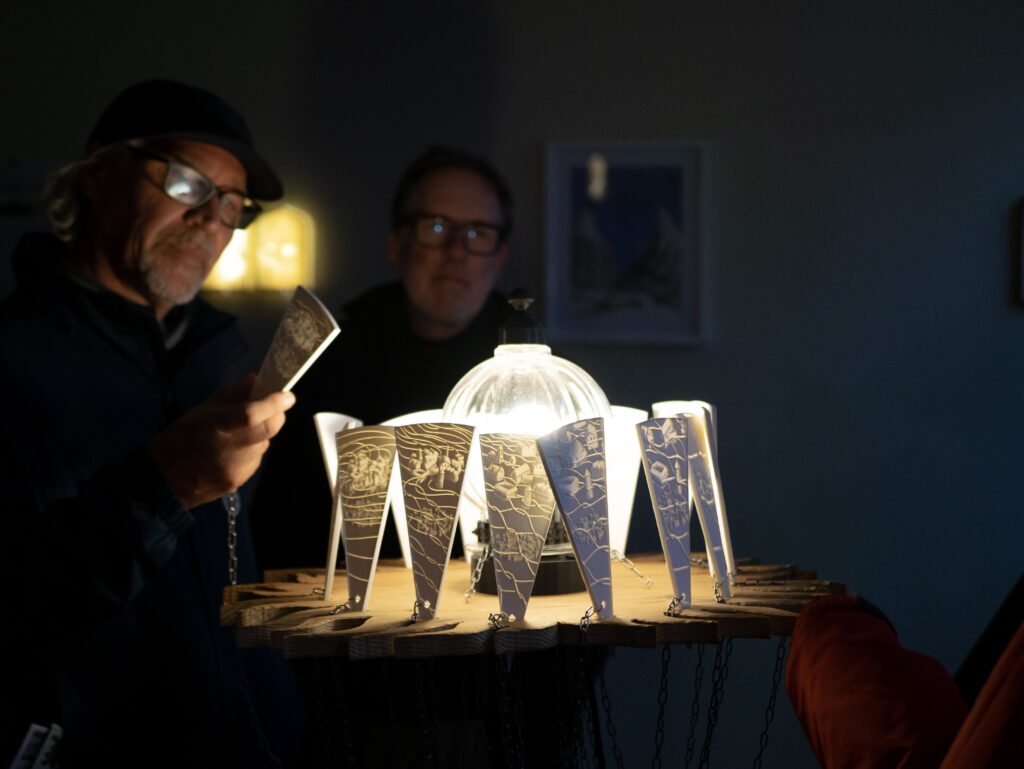
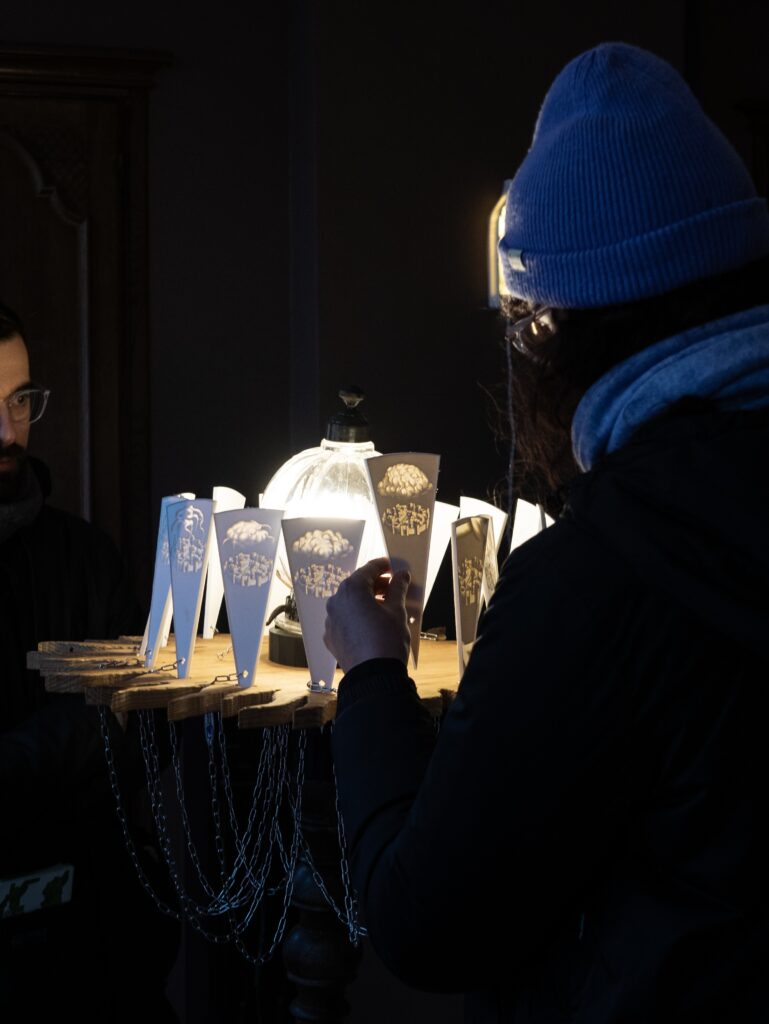
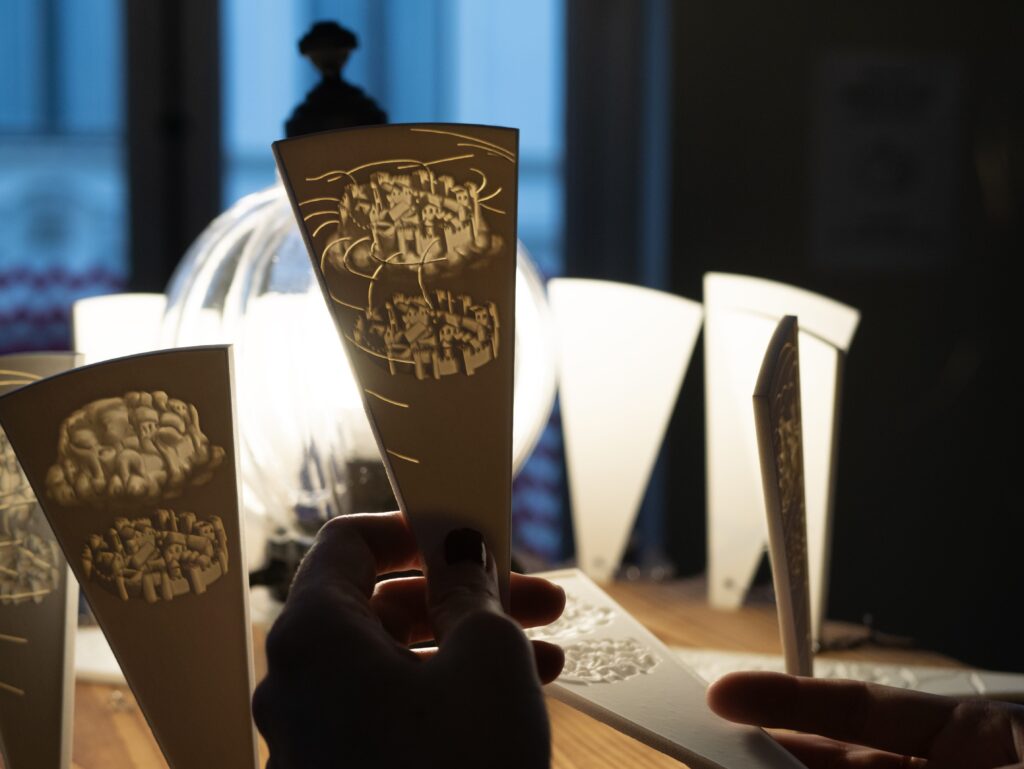
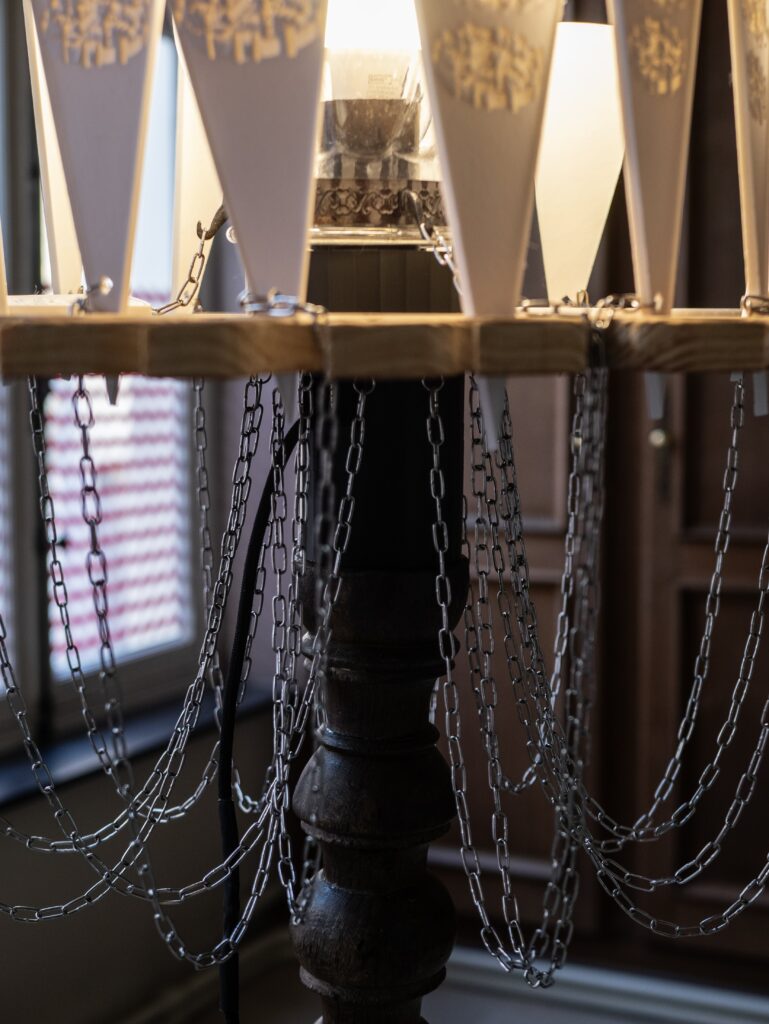
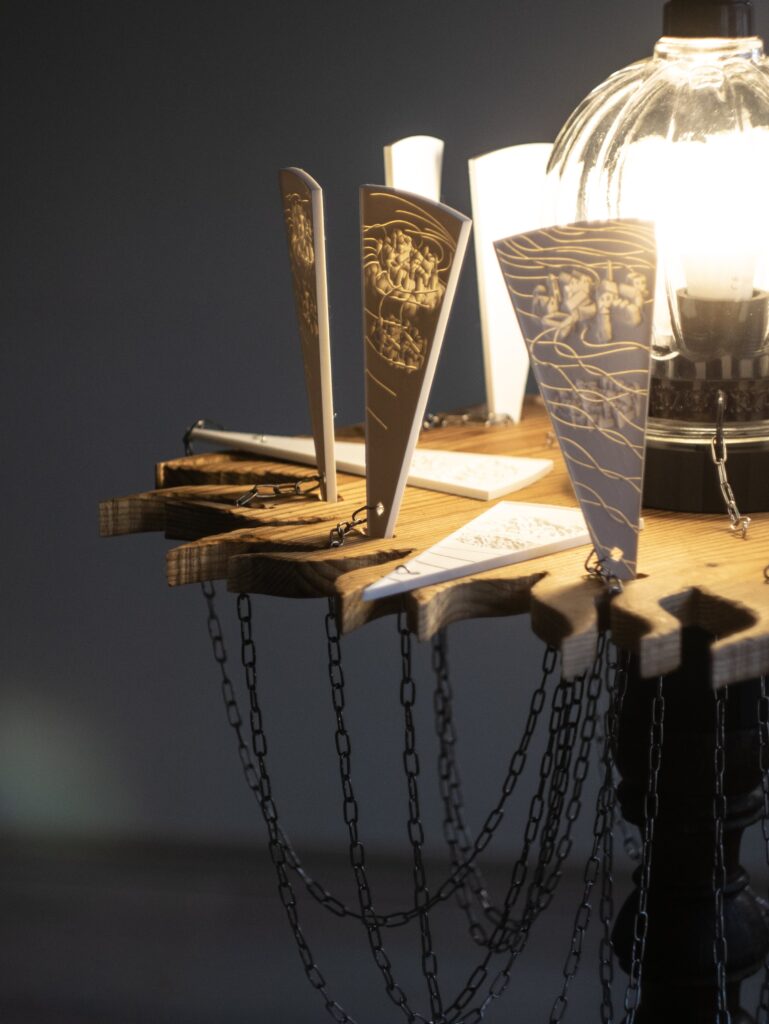
Visitors are welcome to hold the white pieces, the chained shards of an animation, and experiment with how the image on it appears and disappears by placing it in front of the light.
An Invitation to Imagine
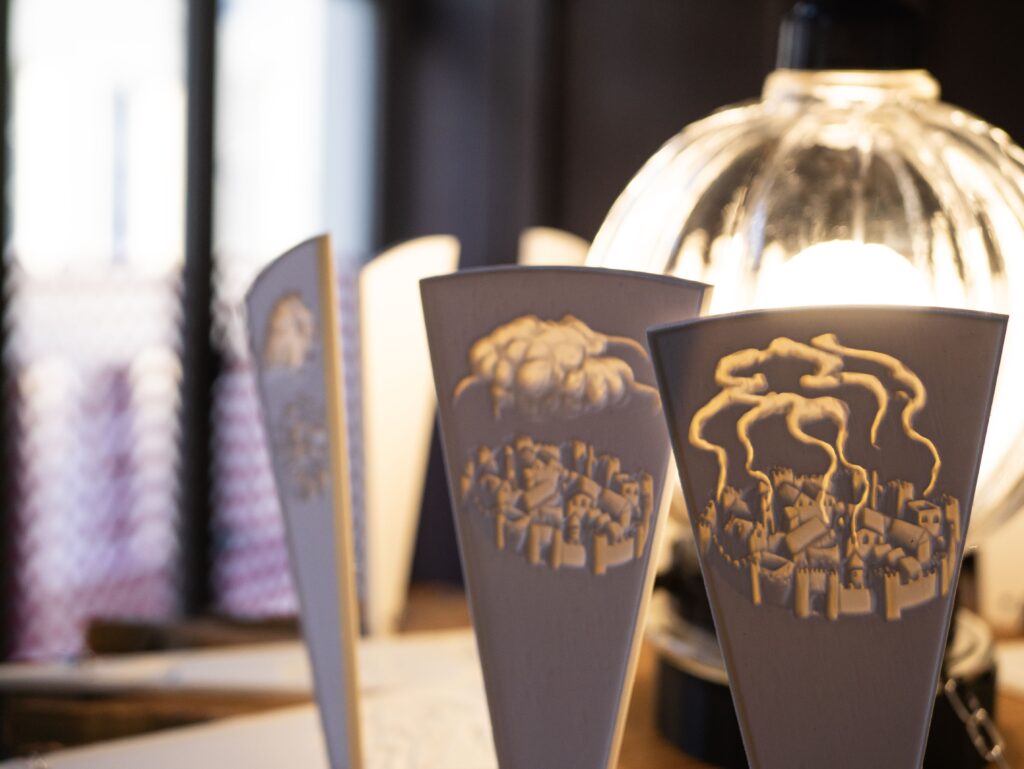
Each shard is a frame, a moment of an animation that maps out how technofeudalism creates an invisible shadow world enclosing us individually into closed domains of masked data extraction and exploitation. Building on the network system of the internet, technofeudalism is a hyperobject, a phenomenon so vast and complex that we can never witness it at once in its entirety, thus understanding, questioning and rebelling against it becomes extremely challenging. Fragments of the Cloud aims to replicate this phenomenon, inviting viewers to mentally piece together what cycle could be depicted in this animation broken into fragments.
An Experiment in Media
This installation combines two forgotten forms of media. One is the phenakistiskope, an early 19th-century Belgian invention. It is a circular disk, cut into 16 frames, on which different stages of an animation were drawn. By spinning the disk and looking through the little holes on its edge, you could see the animation coming to life. Fragments of the Cloud takes the logic of a circular animation on a disk, but shatters it into fragments, so the animation can only be imagined. The shards are white without any paint on them, yet there are images in them that can be visible when they are held in front of a light. This is because its alternating thickness is what creates the image. Where the material is thin, the tones are lighter. Where it is thick, the tones are darker. This technique is called lithophanes, which can be made from porcelain, but these are 3D-printed. They convey images purely by the light that shines through them, glowing like digital screens.
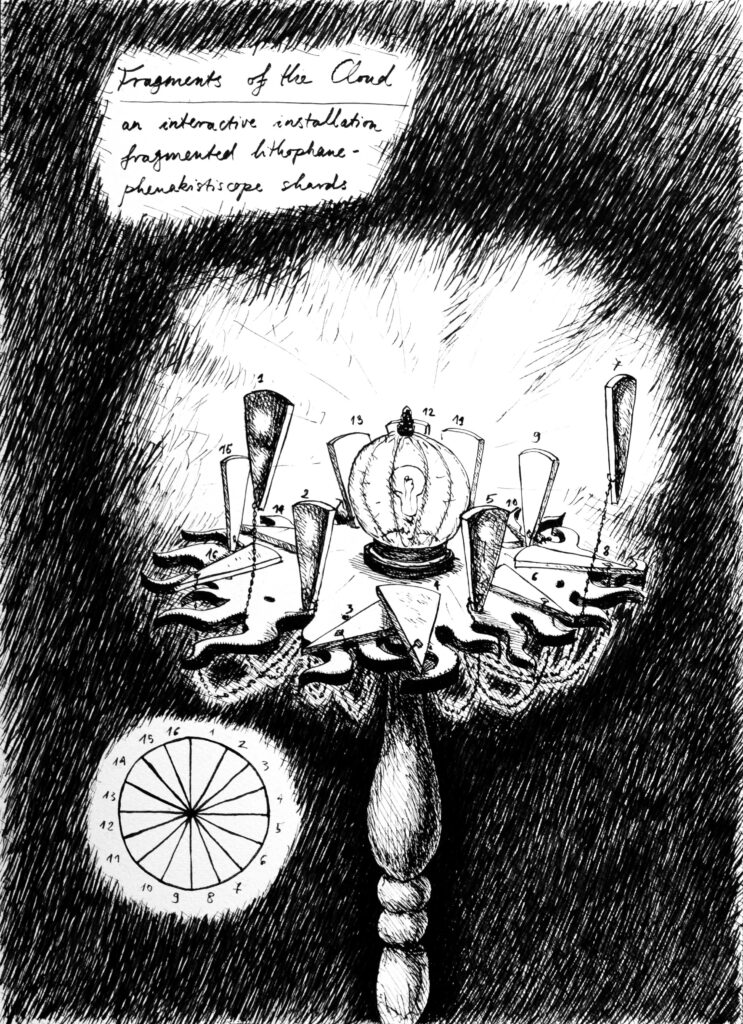
Fragments of the Cloud Study
2026
Ink, 300gr paper, framed
29 x 40 cm, (with frame 43 x 53 x 2,5 cm)
Installation Description ENG
The Network Reigns is an installation that questions the image of the digital “cloud” as abstract and weightless, asking what excessive energy use, mineral extraction, and infrastructure lie behind our screens. Alongside the ecological and geological impact of digital technology, Martha Kicsiny reflects on technofeudalism, where user activity generates unpaid cloud capital, turning the internet into a feudal domain of control and dependency. To visualise the tension between our physical and increasingly dominant digital lives, she uses the symbolic language of archaic myths that she combines with 3D printing, drawing, and antique objects. The light-based images are lithophanes, which are completely white unless backlit. Visitors are invited to experiment with lithophanes via the interactive installation of a circular animation broken into shards. By merging historical image technologies with contemporary digital processes, the exhibition reminds viewers that digital screens are material objects rooted in history and physical realities.
Installation Description NL
The Network Reigns is een installatie die het beeld van de digitale ‘cloud’ als iets abstracts en gewichtloos ter discussie stelt, en zich afvraagt welk buitensporig energieverbruik, welke delfstofwinning en welke infrastructuur er achter onze schermen schuilgaan. Naast de ecologische en geologische impact van digitale technologie reflecteert Martha Kicsiny op technofeodalisme, waarbij gebruikersactiviteit onbetaald cloudkapitaal genereert en het internet verandert in een feodaal domein van controle en afhankelijkheid. Om de spanning tussen ons fysieke en ons steeds dominantere digitale leven te visualiseren, gebruikt ze de symbolische taal van archaïsche mythen, die ze combineert met 3D-printing, tekeningen en antieke voorwerpen. De op licht gebaseerde beelden zijn lithofanen, die volledig wit zijn tenzij ze van achteren worden verlicht. Bezoekers worden uitgenodigd om met lithofanen te experimenteren via de interactieve installatie van een cirkelvormige animatie die in scherven is gebroken. Door historische beeldtechnologieën te combineren met hedendaagse digitale processen, herinnert de tentoonstelling de kijkers eraan dat digitale schermen materiële objecten zijn die geworteld zijn in de geschiedenis en de fysieke realiteit.